

How to Find Your Village and Why It Matters as a New Parent
If you ask parents who've made it through the newborn trenches what made the biggest difference, more often than not they'll say their village. But what does that actually mean, and how do you find it, especially when you're sleep-deprived, overwhelmed, and not even sure what kind of help you need? This episode we're talking with Dawn Ellis, licensed clinical social worker and founder of Gather Well, which organizes support groups for expectant moms, new moms, new dads, and more in the Boston area. She's sharing more than a decade of experience supporting parents through one of life's biggest transitions, what's stayed the same across all those years, what's changed, and what all of it means for parents navigating the newborn stage today.
Note: Information in this episode is based on personal experiences and is provided for educational and entertainment purposes only. Information in the podcast does not constitute personal professional advice. We encourage you to independently evaluate any content and consult with appropriate professionals as needed for your specific circumstances.
Getting Started with Baby Podcast




A Few Key Quotes about Finding Your Village as a New Parent
On why community matters:
"Finding your community really matters. It makes a huge difference to someone's postpartum experience — whether they're isolated and alone, or whether they have a community of people they feel like they can reach out to with hilarious things and hard things and questions." — Dawn Ellis
On parenting in isolation:
"Women parent in community and men parent in isolation. That's really sad, but it's really true for the most part." — Dawn Ellis
On the power of honesty in a group:
"When someone shares honestly, it really feels like a gift. It feels like something you don't get in our society very often." — Dawn Ellis
On there being no one right way to be a parent:
"There's 100% no one right way [to be a parent]. What really matters is for moms to feel really supported during this time of big transition." — Dawn Ellis
New Parent Support Tips from a Community Expert: How to Find and Build Your Village
- Find Your Community Before the Baby Arrives One of the most consistent things Dawn hears from parents who show up to their first support group with a four-month-old is: I didn't even know this existed. By then, they've already white-knuckled their way through what are often the hardest weeks, alone. If you're pregnant, now is the time to look around and see what your community offers. Prenatal support groups exist, and they're not just about getting information. They're about forming bonds with people who will become your people when the baby actually arrives.
- Pain and Struggle Are Normal. But Doing It Alone Isn't The newborn stage is hard for almost everyone, but our culture doesn't always make space for that honesty. Parents, especially first-time parents, often absorb the message that this should feel natural and joyful, and when it doesn't, they assume something is wrong with them. It isn't. What Dawn has observed across 14 years of support groups is that the moment someone in the room says the thing everyone is secretly thinking, Have I made a mistake? Was I really ready for this?, the entire group exhales. That kind of shared honesty is rare outside of a support group setting, and it's one of the most powerful things community can offer.
- The Village Is About Being in It Together at the Same Time Friends and family who have older kids can offer perspective, and that's valuable. But there's something distinct about being alongside someone who is in the exact same two-month window as you, hitting the same wall, asking the same questions, navigating the same feeding strikes and sleep regressions. That real-time solidarity is what makes a support group different from any other kind of advice. Nobody needs to explain why you're tracking every diaper or why you burst into tears over nothing. They already know, because it happened to them yesterday too.
- You Don't Have to Be a "Support Group Person" to Benefit If sharing your feelings with strangers doesn't sound like your thing, you're not alone. But here's what Dawn sees happen consistently: parents who would never call themselves the support-group type leave saying it was the single best thing they did during maternity leave. The key is finding the right format. If a longer, more intimate group feels like too much at first, try something lower-commitment like a drop-in feeding group or a fitness class for new moms. And if you're pregnant, a prenatal group is a low-stakes way to check out a facilitator and a space before you're postpartum and in the thick of it.
- First-Time vs. Second-Time Parent Groups: Very Different Conversations The topics that dominate a group shift significantly depending on where parents are in the journey. In first-time mom groups, conversations tend to center on tracking, wondering, and second-guessing every decision. In second-time parent groups, the infant is almost beside the point, the real challenge is the toddler. Managing big feelings, navigating regression, and trying to parent a small opinionated person while running on no sleep is its own kind of hard, and second-time parents often arrive at group craving expert support on toddler behavior as much as anything else. Both groups need community; they just need it around different things.
- Dads Need Community Too Dawn works with a colleague who runs dedicated support groups for new fathers, and one insight from those groups has really stuck with her: women parent in community, and men parent in isolation. Moms often have a group, a text chain, a friend going through the same thing. Dads frequently don't. They come home from work, try to soothe the baby, the baby cries, and they feel like the baby just doesn't like them. Once dads are in community with each other, they connect deeply, forming group chats, meet-ups, and real friendships. The infrastructure just doesn't exist yet the way it does for moms, and that gap is worth closing.
- Social Media Is Making the Newborn Stage Harder One thing that has genuinely changed over Dawn's 14 years of running groups is the pressure social media creates. The message that you must follow these exact steps right out of the gate or your baby won't sleep, won't develop, won't eat sends parents down rabbit holes and away from their own instincts. The antidote isn't just turning off Instagram (though that helps). It's being in a room with other real parents, watching one family try one approach and another try something completely different, and realizing that babies are individuals and there is no perfect formula. Community replaces the anxiety of rules-based parenting with something more grounding: we're all just figuring it out, and every baby is different.
- Lean Into Your Group, Inside and Outside the Session Showing up is the start, but the magic really happens outside the room. Dawn sets up text chains for her groups so parents can reach out between sessions. Four moms doing sleep training the same weekend, texting each other at 2 AM so no one has to go through it alone. Holiday cookie swaps years later between people who met as strangers in a prenatal group. If the group goes to lunch after the session, go to lunch. Say yes to the park meet-up. Lean in, and those relationships can last a lifetime.
- Ask for Help. It's How the Village Gets Built It can feel uncomfortable to ask for help, especially for people who are used to being capable and self-sufficient. But Dawn consistently hears from parents on their third child that the thing they did differently this time was ask for help, and that it changed everything. Asking for help isn't a sign of weakness; it's actually one of the most effective ways to build community. When you're specific and vocal about what you need, people show up, relationships form, and the village starts to take shape. Your pediatrician's office, your faith community, your coworkers, these are all part of your village too if you let them be.
FAQs: Support Groups and Community for New Parents
When is the best time to join a parent support group?
Ideally before the baby arrives, but it's never too late. Some parents come to their first group when their baby is less than a week old; others don't find their community until four months postpartum. Any time is the right time, and the sooner you find your people, the more of that early stage you get to navigate with support rather than alone.
What can I expect from a new parent support group?
Most groups begin with a check-in where each person shares what's going on, followed by facilitated connection around common themes, and some curriculum. Prenatal groups tend to be more information-heavy; new mom groups are more fluid, following what's most important for the group that week. The goal isn't to be told what to do; it's to create space to figure out what's right for your family.
What if I'm not a "support group type"?
Most people who say this end up being glad they came. The key is finding a facilitator who creates genuine psychological safety, where honesty is welcomed and there's no pressure to have it all together. If a longer commitment feels like too much at first, start with a drop-in class or lower-stakes group and work your way up.
Are there support groups specifically for dads?
Yes, though they're less common. Some local providers like Gather Well partner with specialists who run dedicated new-dad groups. Postpartum Support International also offers free online groups for fathers. If you're a dad and wondering whether there's a group for you, there is, and it's worth finding.
What if there are no groups in my area?
Start with your local library and Facebook community groups, both of which are underused resources. Ask your OB or pediatrician for referrals. And check Postpartum Support International for free virtual options covering a wide range of parent experiences. Online groups are a real and meaningful alternative to in-person.
How do support group friendships turn into real, lasting relationships?
By leaning in outside the group. The parents who form lifelong friendships are the ones who show up for lunch after the session, reply to the text chain, and keep saying yes to the small things. The group creates the container; what you do with it outside the room is what makes it last.
Resources: Where to Find New Parent Support Groups
- Gather Well by Dawn Dawn's Boston-area organization offering support groups for expectant moms, new moms, new dads, second-time parents, and more. A warm, structured community built around the belief that parents deserve real support — not just information. Website: gatherwellbydawn.com | Instagram: @gatherwellbydawn
- Postpartum Support International Offers free online support groups for a wide range of parents, including dads, single parents, military families, and LGBTQ+ families. A fantastic resource if you don't have strong local options or need something you can access from home.
- Your Local Library An underrated and often free starting point for finding local parent groups, classes, and community resources you might not know about.
- Local Facebook Community Groups A quick way to find what's happening near you, from drop-in feeding groups to new parent meet-ups. Search your town or neighborhood name plus "new moms" or "new parents" to see what comes up.
- Your Pediatrician's Office An underrated hub of community and referrals. Many practices now offer lactation consultants, social workers, and other support services. Don't be afraid to ask what's available. Your pediatrician's office is part of your village.
Essential Newborn Products from This Episode

Credit: Amazon
Baby Carrier
Baby Bjorn Mini
Dawn is a strong advocate for baby wearing, especially for second-time parents who are managing a toddler at the same time. A good carrier keeps baby close and your hands free, a genuine game-changer for soothing on the go and staying mobile when you've got a lot going on.
* Please check the retailer for latest price.

Credit: Amazon
Yoga/Exercise Ball
BABYGO
The large bouncy ball is a surprisingly powerful soothing tool that Dawn recommends consistently. Great for settling a fussy baby and giving parents something to do with their nervous energy, including at 2 AM when nothing else is working.
* Please check the retailer for latest price.

Credit: Amazon
Infant Bouncer Chair
Bright Starts Baby Bouncer
A solid hands-free option for moments when you need to put the baby down safely. Dawn recommends investing in good soothing and settling gear. What's good for the baby is good for the parents too.
* Please check the retailer for latest price.
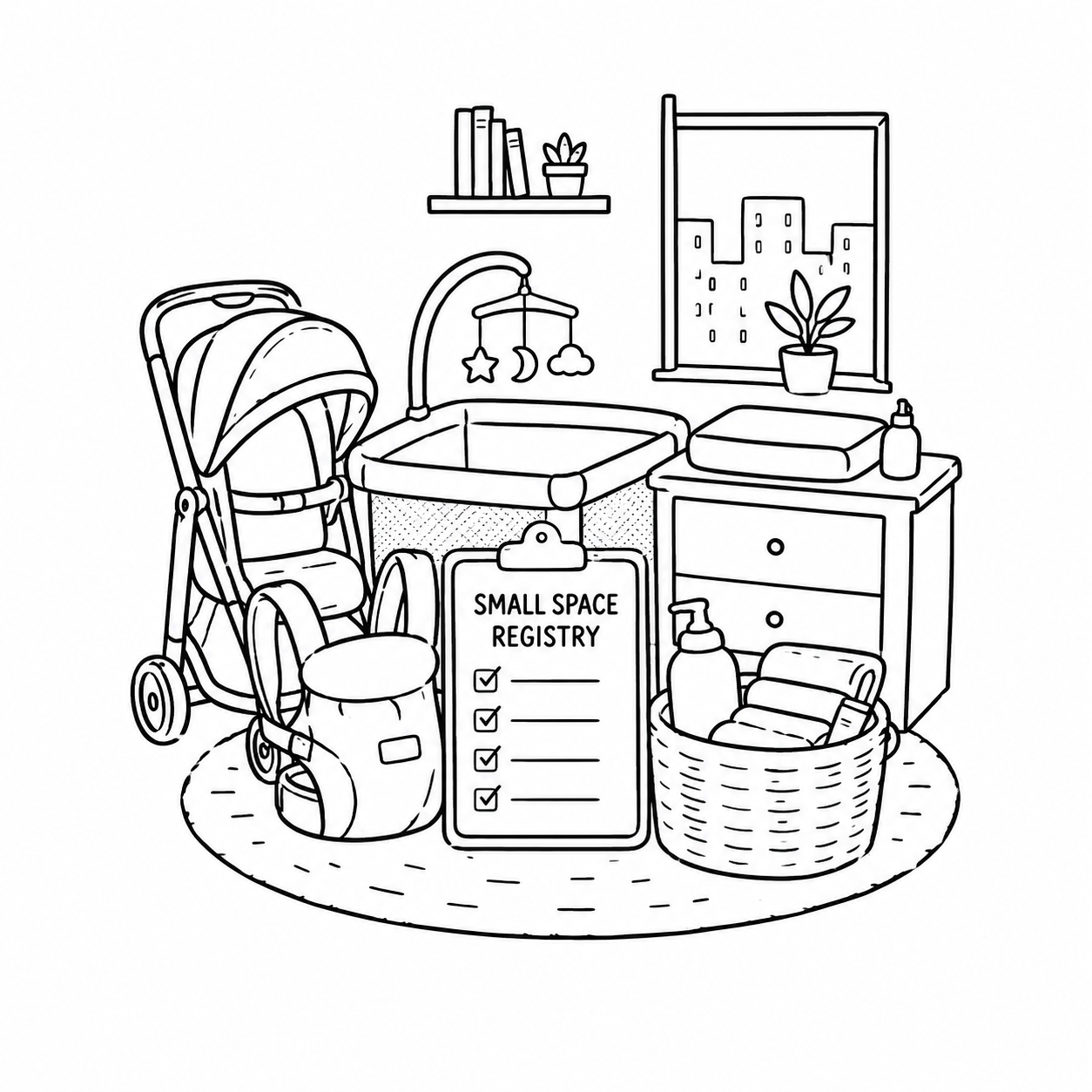
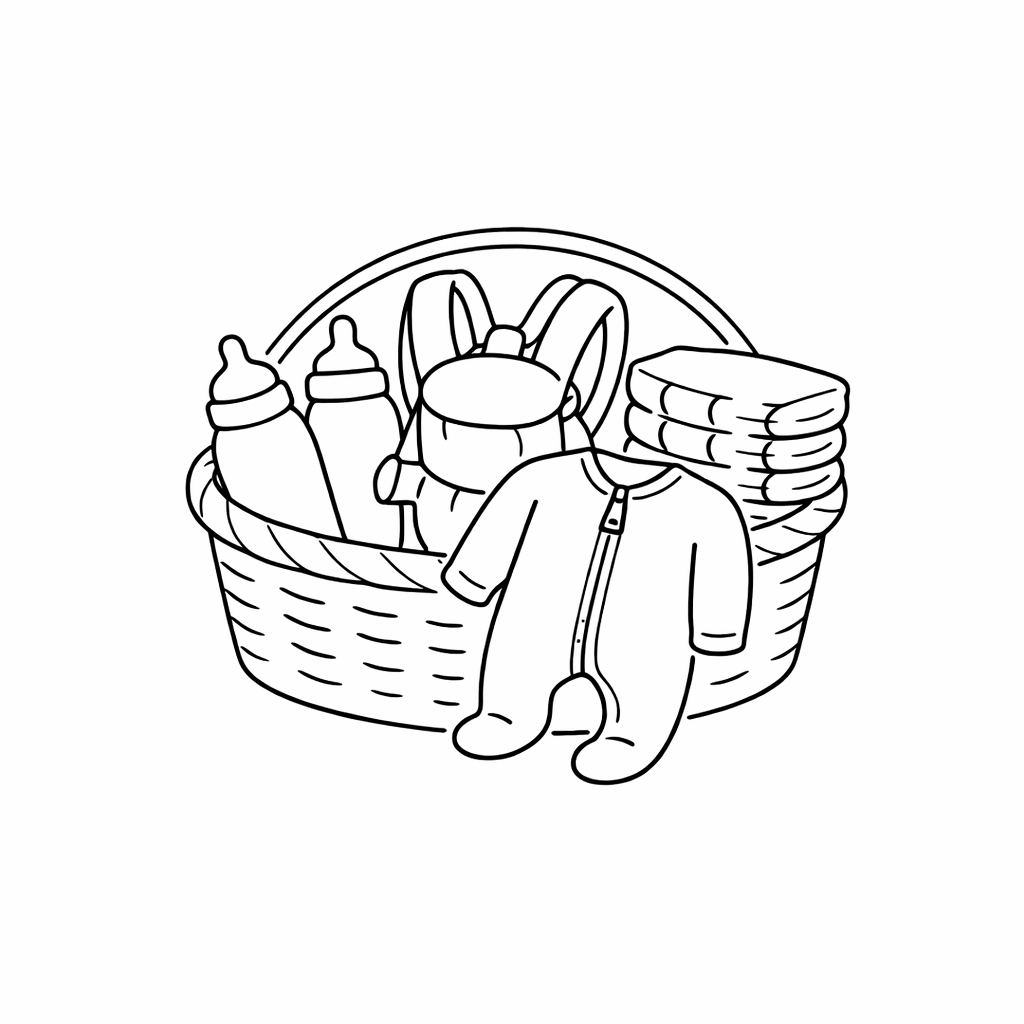
On registering: Dawn's broader advice is to focus on the basics that make you feel safe and ready. Health and safety essentials first. Skip the high chair and the gear meant for older babies until you actually know your child. Every baby is different, and by the time you need those items, you'll have a much better sense of what will actually work for your family.
Full Interview: Dawn Ellis on Building Community and Support for New Parents
[Edited from audio transcript for clarity]
Dawn Ellis's Background in Building Community for New Parents
Jane Dashevsky: If you ask parents who've made it through the newborn trenches what made the biggest difference for them, more often than not they're going to say their village. But what is the village? How do you find it? And when you do, how do you make the most of it? Today we're getting answers to all of those questions from Dawn Ellis, founder of Gather Well, which organizes support groups for expectant moms, new moms, new dads, and other community offerings in the Boston area. Welcome, Dawn.
Dawn Ellis: Thanks. It's really exciting to be here.
Jane: Can you tell us a little bit about your background and your family?
Dawn: Sure. I'm a licensed clinical social worker and I have been for about 23 years. I've been doing support groups in the perinatal and postpartum space for about 14 years now.
Jane: How has your own experience with parenting shaped how you think about the groups you're creating for parents?
Dawn: I think my own experience is that each child is really different and there's no right way, there's 100% no right way. Even within one family, your first kid might sleep great, your second you may end up doing Ferber, and your third you may sleep in the same room until they're three years old. I just feel like creating a space where there's no shame or judgment around any of the choices you make, and that there's just support. I've been doing this for 14 years and just seeing that everybody does something a different way, and in the end, it really doesn't matter that much. What really matters is for moms to feel really supported during this time of big transition.
Jane: That's such an amazing point, because I think when you're in it, especially as a first-time parent, every decision feels like it matters so, so much.
As you were getting started in this work, what reconfirmed your belief that parents really needed this space?
Dawn: I was in a support group myself, with my first and with my twins. And for the first time, those people really were a lifeline for me. I could have friends or relatives who were parents, but having someone who was in that same roughly two-month window as me was huge. Navigating starting solid foods together, navigating sleep together. It gave so much normalcy and just this feeling that I wasn't alone, that other people were struggling with the same things.
Why Being in the Same Phase Makes All the Difference Postpartum
Jane: I remember being part of a support group as well and having that feeling of, oh, people are going through the exact same thing I'm going through. What do you think actually makes such a difference about having community with people who are really in the same phase?
Dawn: I think it's just that real, true feeling of being on the same page. You're literally hitting the point where your adrenaline runs out and you can't make it another day, and you're hitting those points together. I just had a support group this morning where one mom was like, "My adrenaline's run out. What am I doing with my life? I've worked so hard to get to this point in my career, and now I'm like, do I even want to do this?" And there were three other women in the group feeling the exact same thing. Sometimes it's nice to talk to someone with a year of perspective, but to really connect with someone who's in it right now, so you don't feel as alone, not as self-judgmental, that makes a huge difference.
How to Create a Space Where People Actually Open Up
Jane: One of the things that makes some people hesitant, and I know this was true for me before having a kid, is not really being a "share in a group of strangers" kind of person. How do you set up that right space so people actually feel comfortable sharing?
Dawn: I always set up the group with the dynamic that you can go to any group and try to say the things you feel you should say, or do the things you feel you should do but that's not what people really want. I think people can relate to the idea that when someone shares honestly, it really feels like a gift. It feels like something you don't often get in our society. If I'm starting a first-time moms group, someone might say: Have I made a mistake? Was I really ready to become a mom? And as soon as someone says that in the group, there are at least four other women who are like, me too, thank you for sharing that, because now I can share it too. Just normalizing that everybody is having these feelings. Everybody is scared of what this means for them, for their relationship, for what kind of mom or person they are.
Jane: How should someone think about what kind of group might be right for them?
Dawn: Having a baby can make someone who's introverted feel like they suddenly have to become an extrovert because now you have this child you're supposed to be out in the world with. I think showing up for a more intimate, longer-running group works well for some people. For others, it might be better to start with something lighter, like a fitness class for moms or a drop-in feeding group, to try it out before committing to a longer series. But I will say that people who would never describe themselves as a support-group type will leave my groups saying it was the best thing they did for themselves on their maternity leave because they've made all these friends.
Jane: That's such a good point. And there is something so different about that group of people going through the exact same life phase with you. Someone a year out has such valuable perspective, and that is helpful. But it's not the same as being able to share tips in the moment like, "hey, my baby's on some kind of bottle strike right now, what do I do?"
Dawn: Exactly. And even with a group of first-time moms who think they don't know anything if someone's dealing with a feeding refusal or something like that, a bunch of other moms have gone through the same thing, and they get together and there's a ton of information. They know so much together.
Is There a Best Time to Join a Parent Support Group?
Jane: You have groups for expectant parents, new parents, second-time parents, all these different flavors. Is there a best time to join?
Dawn: It depends on your personality and your comfort level getting out of the house with a baby. I have people who know themselves well enough that they'll come to group before their baby is a week old, and people are always like, "I can't believe you got out of the house, good for you." And then I have people who aren't ready until their baby is four months old. I do think finding community before the baby comes is super helpful. The thing that makes me sad is when someone comes in and says, "I didn't even know this existed," and their baby is four months old and they've gone through the hardest parts alone. And then they're like, oh my gosh, I found my people. So for people who are expecting, especially first-time parents, just look around and see what your community offers. And if places do offer prenatal groups, it's a great way to check out the space and make sure it feels right before the baby comes.
Jane: I totally wish I'd done an expectant moms group. I was part of a newborn group and then a second-time-around group. The first time, everyone was very much in the weeds tracking every poop, all of that. And the second time around, nobody even talked about the infant. The toddler was the whole conversation. How have you found the difference between those groups?
Dawn: To a T. The first-time moms: How am I doing this? Am I getting it right? The second-time moms group, even this morning, people were literally like, "can we get an expert on toddlers in here to do a workshop for us?"
Jane: What about expectant parents?
Dawn: A lot of it is just being able to connect and ask questions, just the things on your mind. How do I pick a pediatrician? What am I going to do about childcare? How am I going to navigate work? And the really nice thing about a prenatal group is that those women usually stay bonded. They'll see a mom-and-baby yoga class pop up and be like, "let's go together." And they're cheering each other on when the babies come. It's really sweet.
What the Research and Experience Say About New Dad Groups
Jane: We spend a lot of time talking about moms and the support they need. Let's talk about dads. What have you found about their need for space to process this transition too?
Dawn: I have a different therapist who runs the dads groups. He specializes in early fatherhood. One thing he's shared that has really stuck with me is that women parent in community and men parent in isolation. Which is really sad, but really true for the most part. Women can have a group of other women they're experiencing the challenges of early motherhood with for four or five months. Dads are navigating most of this alone.
The other thing is that it's really important for dads to feel important, to feel like they're really good at something. Maybe they're the best at a certain kind of comforting or a certain type of swaddle. But it is usually easier for moms to soothe babies, especially if they're the primary caregiver in those early months. And so dads often feel like the baby just doesn't like them. They come home from work, pick the baby up, and all the baby does is cry. His perspective is that moms, if they carried and birthed the baby, have had nine or ten months to begin adjusting to becoming a mother. Whereas for a lot of dads, the adjustment really begins when the baby is born. Once dads are in community together, they really do connect. They'll create chat groups, do meetups, form real friendships. I just wish it were more of a norm.
Managing Information Overload Pre and Postpartum
Jane: Have you seen the themes of what parents talk about change over time?
Dawn: Sleep, relationships, and family dynamics have always been there. But I do think having done this for 14 years, I've seen how much more pressure there is now on women from social media. In a lot of groups, there'll be someone who says, "I just had to take social media off my phone," because there is this pressure: you have to do this, this, and this right out of the gate or your baby will never sleep, or if you don't do this, they won't develop well. And people have the best intentions so it's so easy to go down a rabbit hole and get overly focused on those things. That has really changed over time.
Jane: That's such an important point. And it's hard to navigate because people do find genuinely good information on social media. But it can take a turn so quickly. Any advice for parents trying to manage that overload?
Dawn: Community really helps. It's nice to be in a group where someone is trying one thing on a particular issue, another person is trying something else, and another person something else. You see that every baby is different. Sometimes it has nothing to do with what you're trying or who you are as a parent. Babies are just different. Community adds real-life experience into the equation, so it's not so rules-based like, if I follow these rules, this outcome is guaranteed.
Jane: What about how groups can help with that reality that you just have to keep trying things and see what works?
Dawn: The community piece gives you new ideas, support, and the reassurance that there's nothing wrong with you. It's really nice to have other women witness you and say, you're a really good mom, and you're doing a great job, and this just sucks.
How to Get the Most Out of a Parent Support Group
Jane: For anyone who's either a mom, a dad, a couple, or coming in some other configuration, what do you think is important for getting the most out of these groups?
Dawn: I always encourage people to lean in. I set up a text chain for my groups so they can reach out to each other between sessions. I had a group where four women were all doing sleep training the same weekend and were texting each other in the middle of the night like, "it's been three minutes and I'm about to go in and lose my mind." That's what leaning in looks like. I also always encourage the group to go out for lunch afterward. There are a handful of places around here that can accommodate everyone with their strollers. Because as much as you can connect outside the group, the better. I just saw someone send me photos of their kids, they do a holiday party and a cookie swap every year. These are people who met in my group. These relationships can really last a lifetime.
Jane: That is the village, right? That is the dream. What do you see in groups that really successfully transition from the structured setting to those lifelong relationships?
Dawn: It's people really valuing the relationships outside the group. The staying in touch, the checking in.
Advice for New Parents Who Don't Know Where to Start
Jane: Having seen so many different parents and experiences over the years and having been through it yourself, what's the advice you'd share?
Dawn: Finding community is huge. It really is. And beyond that, asking for help. I know it's really hard for a lot of people. But the parents who come to my group with their third child and have a lot of wisdom say: the thing I've done differently this time is I asked for help.
Jane: Someone I spoke with recently said that asking for help was actually how they built community because being more vocal about what they needed made people show up, and that's how relationships formed. People want to help.
Dawn: Yes, and you have some built-in community. Think about your pediatrician. You're going to see them constantly in that first year, and reframing them as part of your village can really help. A lot of pediatricians now have lactation consultants or other services available. Sometimes it's your faith-based community, or coworkers. Part of the village is already around you.
Finding Support as a Parent When You're Not Sure Where to Look
Jane: For parents who aren't in the Boston area or who feel like they can't find something in their community, what would you recommend?
Dawn: You may think there's nothing out there, but I'd start with a local Facebook group. Libraries will often have resources. Ask your OB or your pediatrician. And on Instagram, you can find Postpartum Support International. They run a lot of free online support groups for dads, military parents, same-sex couples, single parents. There are really all types of support groups available through them.
Product Recommendations: What New Parents Actually Need
Jane: Are there any products or things you really swear by for new parents?
Dawn: Anything that helps babies sleep a little more, always a yes. But practically: bouncers are great, those giant yoga balls you can bounce your baby on are wonderful for soothing. Baby carriers are great, especially for second-time parents. Not every first-time mom gets into the carrier right away, but if you have a baby who really wants to be on your body all the time, and you need to get off the couch, a good carrier is a game-changer.
Jane: What about things parents gravitate toward that maybe aren't as necessary?
Dawn: I don't want to say any particular product isn't great, because every baby and every parent is different. Whatever you register for, there's also an emotional piece to it. You're like, "I think this is what I'm going to need," and that feeling of being prepared matters. But you don't have to register right away for the high chair or the things meant for older kids. Focus on the basics that make you feel safe and that address your baby's health and safety. You don't know yet how your baby's going to sleep or eat, so some things, you can just wait.
Jane: I completely relate to that. I had no babies in my life growing up, and I remember being really shocked by how little newborns could do for how long. I remember thinking, why did anyone suggest I put a high chair on my registry?
Jane: If you had to tell someone just one thing to take away from this conversation, what would it be?
Dawn: Finding your community really matters. It makes a huge difference to someone's postpartum experience, whether they're isolated and alone, or whether they have a community of people they feel like they can reach out to with hilarious things and hard things and questions.
Jane: Absolutely. And that group that's going through it with you at the same time will also be up at three in the morning.
Dawn: One hundred percent.
Interested to hear more or get in touch with Dawn? Reach out via her website gatherwellbydawn.com or follow her on Instagram @gatherwellbydawn.
.jpg)

.png)